
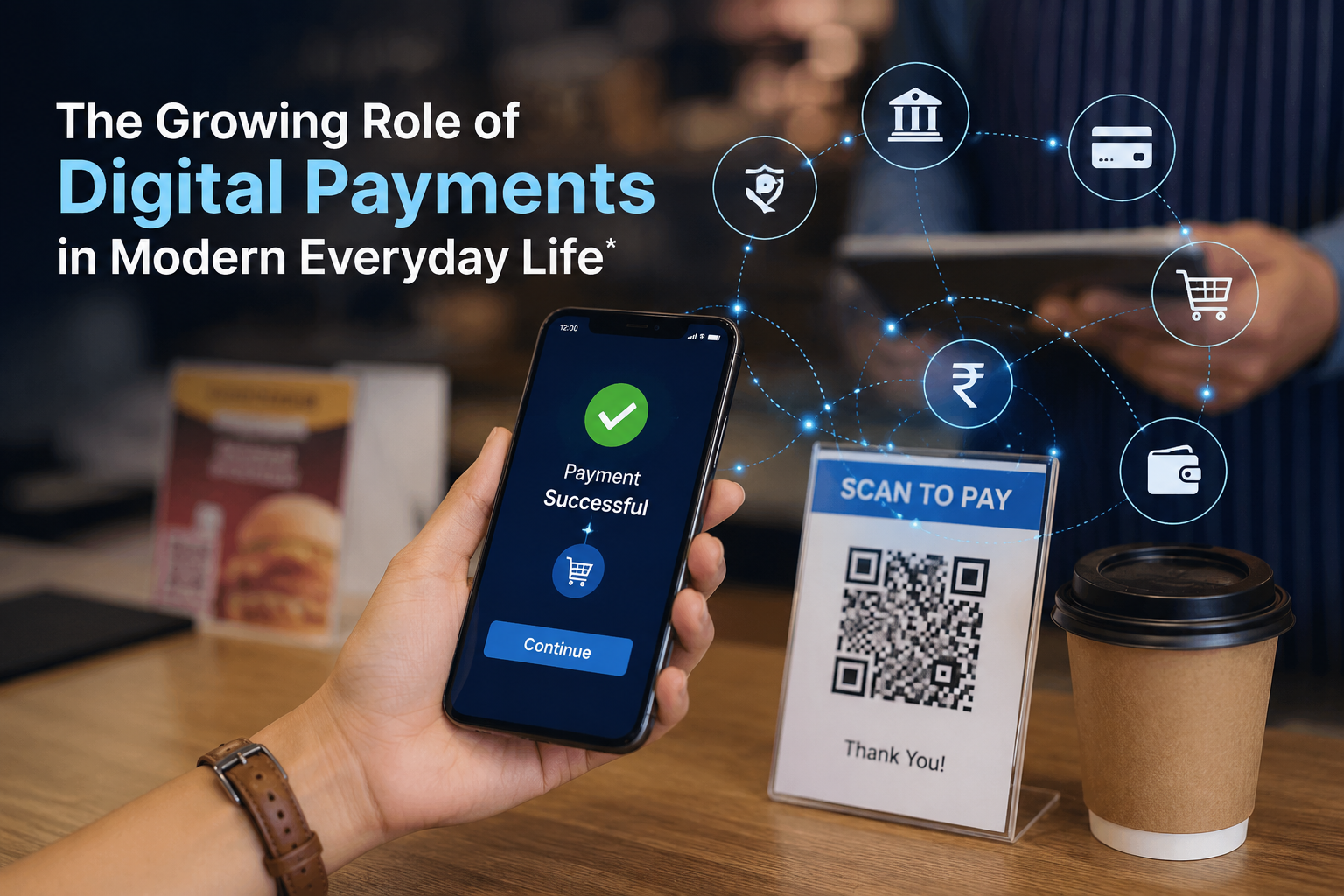
Digital payments have become an important part of everyday life. From purchasing groceries and ordering food to paying bills, booking tickets, transferring money, and shopping online, people can now complete many financial transactions without using physical cash.
The growth of smartphones, internet connectivity, banking services, and payment applications has made digital transactions increasingly accessible. Businesses of all sizes are also adopting digital payment methods because they can provide customers with additional convenience.
Digital payments are not limited to large companies or online stores. Local shops, small businesses, service providers, restaurants, educational institutions, and independent professionals can also use digital payment systems.
As technology continues to develop, digital payments are becoming an important part of the modern economy while changing how people manage everyday transactions.
Understanding Digital Payments
Digital payments refer to transactions where money is transferred electronically rather than exchanged physically.
These payments can take place through bank transfers, cards, digital wallets, mobile payment applications, and other electronic systems.
Convenience Is a Major Advantage
Digital payments allow customers to make transactions without carrying large amounts of cash.
A person can often complete a payment using a smartphone or payment card within a short period.
This convenience is particularly useful for everyday purchases.
Digital Payments Support Different Types of Transactions
People can use digital payment methods for small purchases as well as larger transactions.
Payments can include shopping, transportation, food delivery, utility bills, subscriptions, education fees, and many other services.
The Role of Smartphones
Smartphones have played an important role in the growth of digital payments.
Payments Through Mobile Applications
Many payment applications allow users to transfer money, scan payment codes, check transaction histories, and manage other financial activities.
This makes financial transactions more accessible during everyday activities.
QR Code Payments
QR codes have become a familiar payment method in many markets.
Customers can scan a merchant's code using a compatible payment application and complete the transaction digitally.
This can be particularly useful for small businesses because it can provide a simple way to accept electronic payments.
Digital Payments for Small Businesses
Digital payments have created opportunities for small businesses to participate in the digital economy.
Local Shops Can Accept Electronic Payments
Small retailers, food vendors, service providers, and independent professionals can use digital payment systems to accept customer payments.
This provides customers with more payment options.
Better Transaction Records
Electronic transactions can create digital records that businesses can use for bookkeeping and financial tracking.
Organized records can make it easier to review income and expenses.
The Growth of Online Shopping
E-commerce and digital payments have developed alongside each other.
Faster Checkout Experiences
Online stores can integrate payment systems directly into checkout pages.
Customers can select a preferred payment option and complete transactions without handling physical currency.
Multiple Payment Options
Online businesses often provide several methods, including cards, bank transfers, digital wallets, and other available payment systems.
Offering different options can help businesses serve customers with different preferences.
Digital Payments and Everyday Bills
People can also use electronic payment systems to manage recurring expenses.
Utility Payments
Electricity, water, internet, mobile services, and other household bills can often be paid digitally.
This can reduce the need to visit physical payment centers.
Subscription Payments
Digital payment systems also support subscriptions for entertainment, software, education, fitness, and other services.
Automatic payment options can make recurring transactions more convenient, although users should regularly review their subscriptions and payment records.
Digital Payments and Travel
Travel has also benefited from electronic payment systems.
Booking Transportation
People can use digital payments to purchase airline tickets, train tickets, bus tickets, and other transportation services.
Hotels and Travel Services
Accommodation providers, restaurants, tour operators, and other travel businesses can also accept digital transactions.
This can make travel more convenient, particularly when people need to manage multiple transactions during a trip.
Digital Payments and Financial Awareness
Electronic transactions can help people monitor their spending.
Reviewing Transaction History
Digital payment applications and banking platforms generally provide transaction records.
Users can review where and when payments were made.
Budgeting
Regularly reviewing expenses can help people understand their spending patterns.
Some financial applications can also categorize transactions or provide summaries.
However, users should still maintain their own financial discipline rather than depending entirely on automated tools.
Security in Digital Payments
Security is one of the most important considerations in electronic transactions.
Protecting Payment Information
Users should avoid sharing passwords, personal identification numbers, one-time passwords, or other confidential payment information.
Banks and payment providers generally advise customers to be cautious about unexpected messages and suspicious links.
Recognizing Fraud Attempts
Scammers may use fake calls, messages, websites, or social media accounts to obtain sensitive information.
Users should verify the identity of anyone requesting payment details and avoid clicking suspicious links.
If a payment request seems unusual, it is better to verify it through an official channel before proceeding.
The Importance of Digital Literacy
As digital payments become more common, people need basic knowledge about online financial safety.
Understanding Payment Processes
Users should know how to check transaction details, identify recipients, review payment confirmations, and report suspicious activity.
Learning About Privacy
People should also understand how personal and financial information is handled by digital services.
Reading basic privacy and security information can help users make informed decisions.
Digital Payments and Contactless Transactions
Contactless payment methods have become increasingly common.
Convenient Everyday Purchases
Contactless cards and compatible mobile devices can allow users to make certain payments without physically inserting a card or handling cash.
These systems can make everyday transactions faster.
Appropriate Security Measures
Payment providers use different security technologies to protect transactions.
Users should still follow recommended security practices and monitor their accounts for unfamiliar transactions.
Digital Payments and Financial Inclusion
Digital payment systems can potentially make financial services more accessible to people who previously relied heavily on cash.
Connecting People With Formal Financial Systems
Bank accounts and digital payment services can allow users to participate more easily in electronic commerce.
Access depends on factors such as connectivity, digital literacy, availability of financial services, and local infrastructure.
Supporting Small Transactions
Digital payment systems can be useful for everyday purchases, including transactions at small shops and local service providers.
Challenges of Digital Payments
Despite their benefits, digital payments also have limitations.
Internet and Technical Problems
Some digital payment systems depend on internet connectivity, mobile devices, electricity, or functioning payment infrastructure.
Technical problems can sometimes interrupt transactions.
Digital Access Differences
Not everyone has the same level of access to smartphones, internet services, or banking facilities.
This means cash and other traditional payment methods may remain important for many communities.
The Importance of Reliable Infrastructure
For digital payments to work effectively, several systems need to operate together.
Banks, payment networks, telecommunications providers, merchants, applications, and security systems all contribute to the payment process.
Businesses Need Reliable Systems
A merchant's payment system should be easy to use and dependable.
Clear payment confirmation can also help reduce confusion between customers and businesses.
Customers Need Clear Information
Users should receive understandable confirmation of successful or unsuccessful transactions.
This can help them avoid accidentally making duplicate payments.
Digital Payments and the Future of Business
Businesses are increasingly combining payments with other digital services.
Integrated Business Platforms
Modern business systems can connect payments with inventory, accounting, customer management, and sales information.
This can help businesses manage operations more efficiently.
Personalized Customer Experiences
Digital transactions can also support loyalty programs, digital receipts, and other customer services.
Businesses can use these tools responsibly to improve customer relationships while respecting privacy.
The Future of Digital Payments
Digital payments are likely to continue evolving as technology advances.
Artificial intelligence, biometric authentication, wearable devices, faster payment networks, and improved security systems may influence future payment experiences.
Wearable Payment Devices
Smartwatches and other connected devices can already support certain payment systems.
As wearable technology develops, payments may become increasingly integrated into everyday devices.
Stronger Security
Payment providers are likely to continue developing authentication and fraud-detection technologies.
The goal will be to make digital transactions both convenient and secure.
Conclusion
Digital payments have transformed everyday financial transactions by providing convenient alternatives to physical cash.
From local stores and online shopping to utility bills, travel bookings, subscriptions, and business transactions, electronic payments are now part of many aspects of modern life.
Their growth has created opportunities for businesses while giving customers more flexibility in how they pay. At the same time, digital payment users need to understand basic security practices and remain alert to fraud.
Technology will continue to shape the future of payments, but convenience should always be balanced with security, accessibility, privacy, and responsible financial habits.
As digital infrastructure continues to improve, electronic payments are likely to become even more integrated into everyday activities, making financial transactions faster, more connected, and increasingly convenient for consumers and businesses alike.