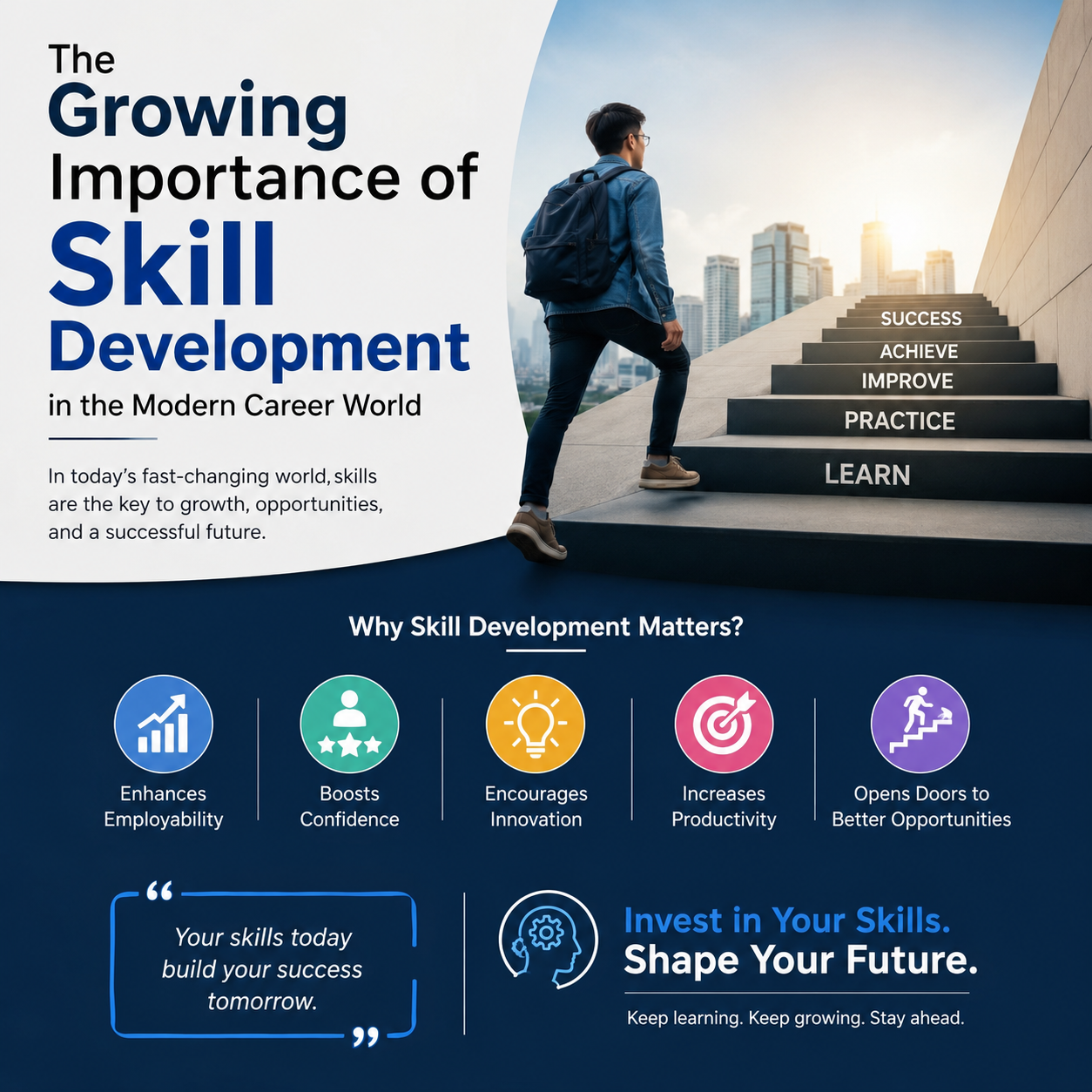
The world of work is changing rapidly. New technologies, evolving industries, digital platforms, and changing customer expectations are creating new opportunities while also changing the skills professionals need to succeed. A degree or formal qualification remains valuable, but employers increasingly look at a broader combination of knowledge, practical abilities, communication, adaptability, and problem-solving skills.
Skill development has therefore become an important part of modern career growth. People are no longer expected to learn everything at the beginning of their careers and then rely on the same knowledge for decades. Continuous learning has become a natural part of professional life.
Whether someone is a student preparing for their first job, a professional looking for career growth, or an entrepreneur building a business, developing relevant skills can create greater confidence and more opportunities.
Understanding the Importance of Skill Development
Skill development refers to the process of improving abilities that help a person perform tasks effectively.
These skills can be technical, creative, professional, interpersonal, or managerial.
Skills Go Beyond Academic Qualifications
Educational qualifications provide an important foundation, but practical skills help people apply what they have learned.
For example, a student may understand the theory of digital marketing but still need practical experience with research, analytics, content planning, and campaign management.
Similarly, someone with a business degree may need strong communication, negotiation, teamwork, and decision-making abilities to succeed professionally.
Skills Build Professional Confidence
When people develop practical abilities, they often become more comfortable handling responsibilities.
Confidence can grow through practice, experimentation, feedback, and experience.
Instead of expecting immediate perfection, professionals can focus on gradual improvement.
Technical Skills Are Becoming More Valuable
Technology is influencing almost every industry.
As businesses adopt digital systems, employees increasingly need to understand the tools and technologies relevant to their roles.
Digital Literacy Is Essential
Digital literacy includes the ability to use computers, online platforms, communication tools, productivity software, and digital services effectively.
Even professionals who do not work directly in technology may need basic digital skills to perform everyday responsibilities.
Industry-Specific Skills Matter
Different careers require different technical knowledge.
A designer may need graphic design and editing tools, while a marketer may need analytics and advertising platforms. A finance professional may require financial software and data analysis skills.
The key is to identify which skills are relevant to a particular career path and develop them systematically.
Soft Skills Are Equally Important
Technical expertise alone does not guarantee professional success.
Soft skills influence how people communicate, collaborate, solve problems, and handle workplace situations.
Communication Skills
Strong communication is useful in almost every profession.
Professionals need to explain ideas clearly, listen to others, write effectively, participate in meetings, and communicate with customers or colleagues.
Good communication can reduce misunderstandings and improve teamwork.
Teamwork and Collaboration
Modern workplaces often involve teams with people from different backgrounds and areas of expertise.
Employees need to cooperate, share responsibilities, respect different opinions, and work toward common goals.
The ability to collaborate effectively can be valuable in both traditional offices and remote work environments.
Critical Thinking and Problem-Solving
Businesses regularly face challenges that do not have simple answers.
Employees who can analyze situations, identify possible causes, evaluate options, and develop practical solutions can provide significant value.
Asking the Right Questions
Problem-solving begins with understanding the actual problem.
Instead of immediately reacting to a situation, professionals can gather information and ask relevant questions.
This can help prevent solutions that address symptoms rather than the underlying issue.
Learning From Mistakes
Mistakes are often part of professional development.
Reviewing what went wrong, understanding the reason, and identifying ways to improve can turn an unsuccessful experience into a learning opportunity.
A growth-oriented approach focuses on improvement rather than simply avoiding every mistake.
Adaptability Is a Key Career Skill
Industries can change quickly.
New software, business models, technologies, customer expectations, and workplace practices can influence how jobs are performed.
Professionals Need to Keep Learning
Continuous learning helps people remain prepared for change.
Learning does not always require a formal degree. Professionals can develop skills through workshops, online courses, books, webinars, practical projects, professional communities, and workplace experience.
Adaptability Creates New Opportunities
People who are comfortable learning unfamiliar tools and adjusting to new situations may be better prepared to take advantage of emerging opportunities.
Adaptability is especially useful when professionals move into new roles or industries.
The Role of Online Learning
The internet has made skill development more accessible.
People can find courses, tutorials, educational videos, webinars, digital books, practice platforms, and professional communities online.
Flexible Learning for Busy Professionals
Working professionals may not have the time to attend traditional classes every day.
Online learning can allow them to study during evenings, weekends, or other available periods.
This flexibility makes continuous education more practical for many people.
Learning Through Practical Projects
Watching tutorials is useful, but practical application is equally important.
A learner can build a sample project, create a portfolio, complete exercises, or work on real-world tasks to strengthen their understanding.
Practical experience can also provide evidence of ability when applying for jobs.
Artificial Intelligence and New Career Skills
Artificial intelligence is changing the workplace and creating new expectations for professionals.
People are increasingly learning how to work with AI-based tools to improve productivity and support decision-making.
AI Literacy Is Becoming Important
Professionals should understand what AI tools can and cannot do.
Learning how to provide clear instructions, evaluate outputs, verify information, protect sensitive data, and use AI responsibly can become a useful workplace skill.
Human Skills Still Matter
AI can automate certain tasks, but human judgment remains important.
Creativity, communication, empathy, leadership, critical thinking, and decision-making continue to play major roles in professional environments.
The future is likely to involve people working alongside technology rather than relying entirely on one or the other.
Building a Strong Professional Portfolio
A portfolio can demonstrate practical abilities more effectively than a list of skills alone.
Show What You Can Do
Depending on the profession, a portfolio may include designs, writing samples, marketing projects, presentations, websites, research projects, videos, case studies, or other examples of work.
A strong portfolio gives potential employers or clients an opportunity to see practical capabilities.
Keep Your Portfolio Updated
As skills improve, professionals can add new projects and remove outdated examples.
A regularly updated portfolio can reflect professional growth and current capabilities.
Networking Supports Skill Development
Professional networking can provide opportunities to learn from others.
Industry events, online communities, workshops, conferences, and professional platforms can connect people with experienced professionals.
Learn From Experienced People
Mentors and experienced colleagues can provide valuable advice based on real-world situations.
Their feedback can help learners understand industry expectations and identify areas for improvement.
Collaboration Creates Learning Opportunities
Working with others can expose people to new approaches and ideas.
A collaborative project can teach skills that may be difficult to develop through independent study alone.
Skill Development for Students
Students can begin developing professional skills before entering the workforce.
Participate in Projects
Academic and personal projects can help students apply theoretical knowledge.
Projects can also develop teamwork, research, presentation, planning, and problem-solving abilities.
Explore Different Career Areas
Students do not always know which career path they want to follow.
Exploring different subjects, internships, workshops, and practical activities can help them understand their interests and strengths.
This exploration can make future career decisions more informed.
Skill Development for Working Professionals
Professionals should not stop learning after getting a job.
Upgrade Existing Skills
Industries change, so professionals can regularly update their knowledge.
For example, a marketing professional may need to learn new analytics tools, advertising formats, content strategies, or search technologies as the industry develops.
Develop Complementary Skills
Learning skills outside one's primary role can also create opportunities.
A technical professional who develops communication and leadership skills may become better prepared for management responsibilities.
Similarly, a creative professional who understands basic business principles may be better positioned to work with clients and manage projects.
Challenges in Skill Development
Learning new skills can be rewarding, but it also requires commitment.
Finding Time
Busy schedules can make continuous learning difficult.
Creating a realistic learning routine can help. Even a small amount of consistent study each day or week can contribute to progress.
Choosing the Right Skills
The internet provides countless courses and learning resources.
This can sometimes make it difficult to decide what to learn.
Professionals should focus on skills connected to their career goals rather than trying to learn everything at once.
Staying Consistent
Starting a course is easy; completing it and applying the knowledge requires discipline.
Setting small goals, practicing regularly, and tracking progress can make learning more manageable.
The Future of Career Development
The future workplace is likely to place even greater emphasis on continuous learning.
Technology will continue to create new roles while changing existing ones.
Professionals may need to update their skills multiple times throughout their careers.
Lifelong Learning Will Become More Common
Career development will increasingly be viewed as a continuous process.
People may move between roles, industries, and responsibilities more frequently than previous generations.
The ability to learn and adapt will therefore become an important career advantage.
Skills-Based Opportunities May Increase
Employers may increasingly focus on what candidates can actually do in addition to their formal qualifications.
Practical projects, portfolios, certifications, internships, and demonstrable experience can help candidates communicate their capabilities.
Conclusion
Skill development has become an essential part of modern professional life. Academic education provides an important foundation, but practical skills, communication, adaptability, creativity, problem-solving, and digital knowledge can help people navigate a changing career environment.
Technology has made learning more accessible than ever. Students and professionals can use online courses, practical projects, professional communities, and digital tools to continuously improve their abilities.
The most successful approach is not to learn everything at once but to identify meaningful goals and develop relevant skills step by step.
In a rapidly changing professional world, the willingness to learn may be one of the most valuable skills of all. Continuous improvement can help individuals remain adaptable, confident, and prepared for new opportunities throughout their careers.